01
Indian Rugs: From Mughal Workshops to Today
Hand-knotted rugs reached India with the Mughal emperors. Their court workshops, in cities such as Agra, brought in Persian designs and weavers and adapted them to local taste. The result was the Indo-Persian style that still shapes many Indian rugs.
By the late 19th century, Agra and Amritsar were known for large carpets, many of them made for buyers abroad. Several antique pieces in our collection date from this period.
Today, India is one of the world's largest producers of hand-knotted rugs. Our selection covers both: antique pieces and newer rugs knotted in the same tradition. The age of each rug is listed on its product page.
02
Patterns, Colours and Construction
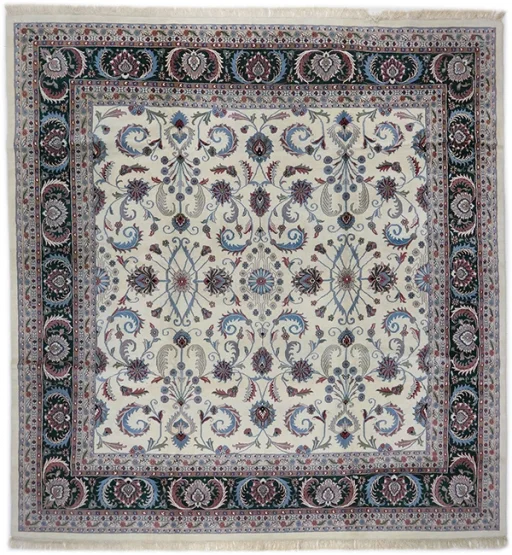
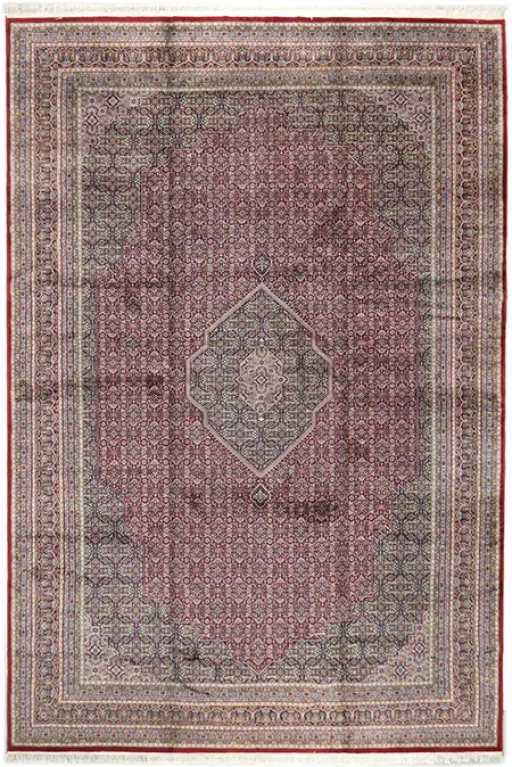
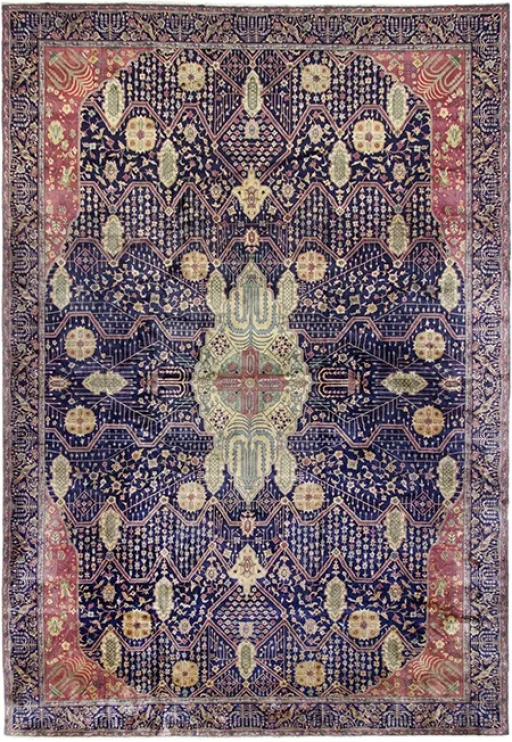
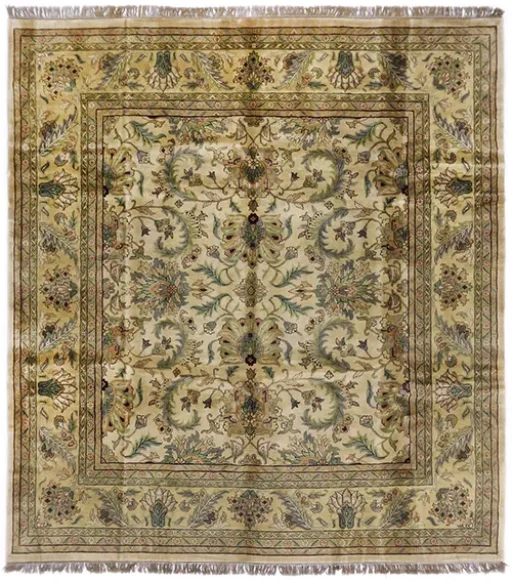
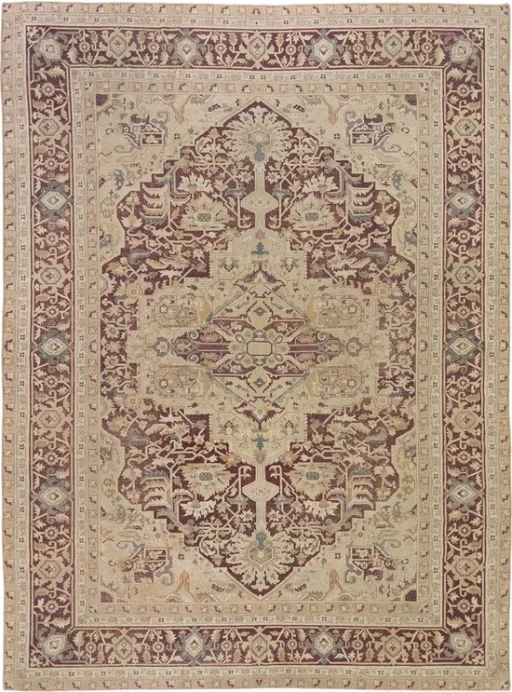
Most Indian rugs in our collection follow Indo-Persian designs: a central medallion or an all-over pattern of palmettes, rosettes and vines, framed by a wide border. Compared with many Persian originals, the drawing is often larger and slightly more open.
The colours are classic: cream and ivory grounds, deep red, dark red and dark blue, with accents in green, gold or rust.
All pieces are hand-knotted from wool on a cotton foundation. Knot density varies from about 90,000 to over 360,000 knots per m², depending on age and workshop, and the exact value is listed for every rug. You can read more in our guide to materials and knotting techniques.
03
The Styles in Our Collection
Our Indian rugs come from three weaving centres, each with its own character.
Agra
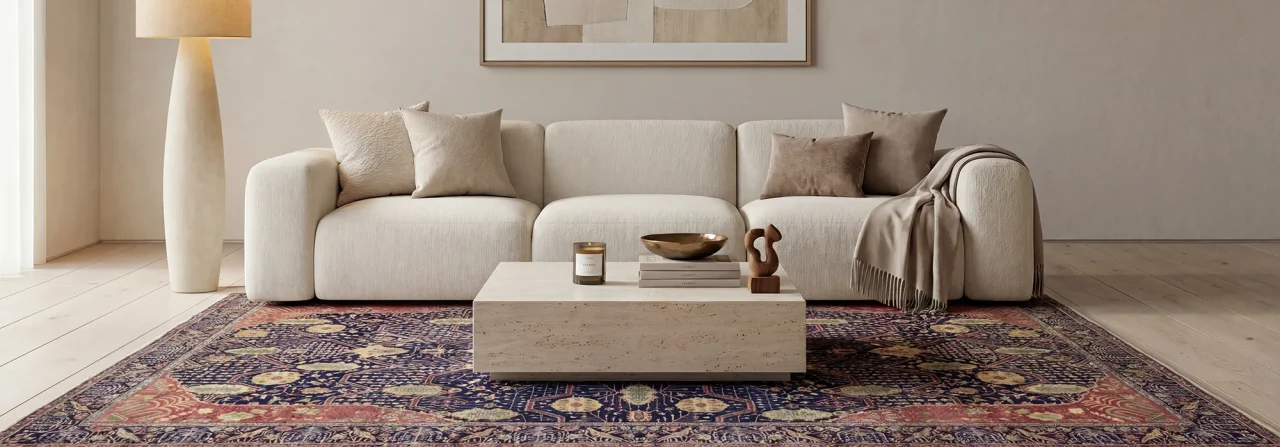
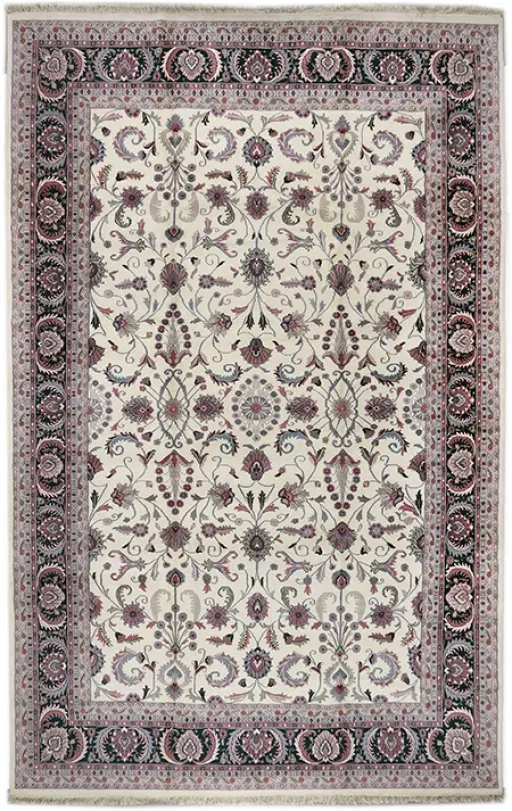
Agra rugs come from one of the oldest weaving centres in India, closely tied to the Mughal court. They are known for large formats, robust wool and classic Indo-Persian designs. Our selection includes a 1920s antique in dark blue as well as newer pieces in cream and dark blue. An Agra suits a formal living room or a large dining room where the rug sets the tone.
Jaipur
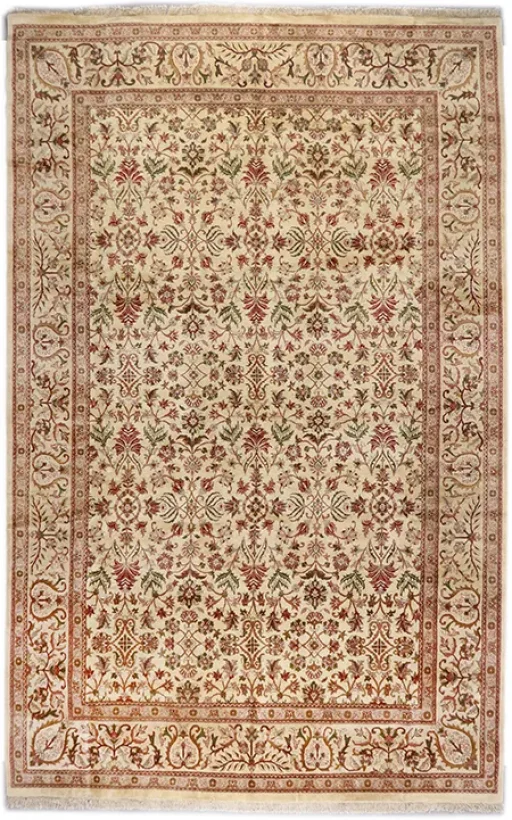
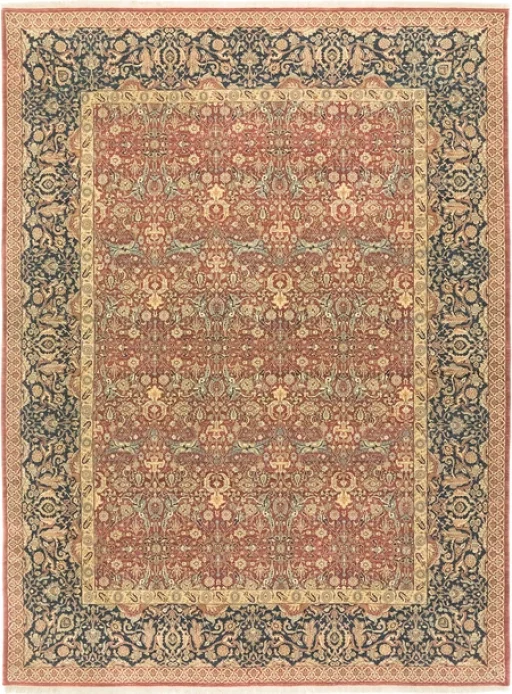
Jaipur rugs come from Rajasthan, a long-established weaving centre. Our Jaipur pieces are mostly older rugs from the 1990s, with soft wool and designs in red or cream. Several are more than five metres long, which makes them a good choice for open-plan living areas and large halls.
Amritsar
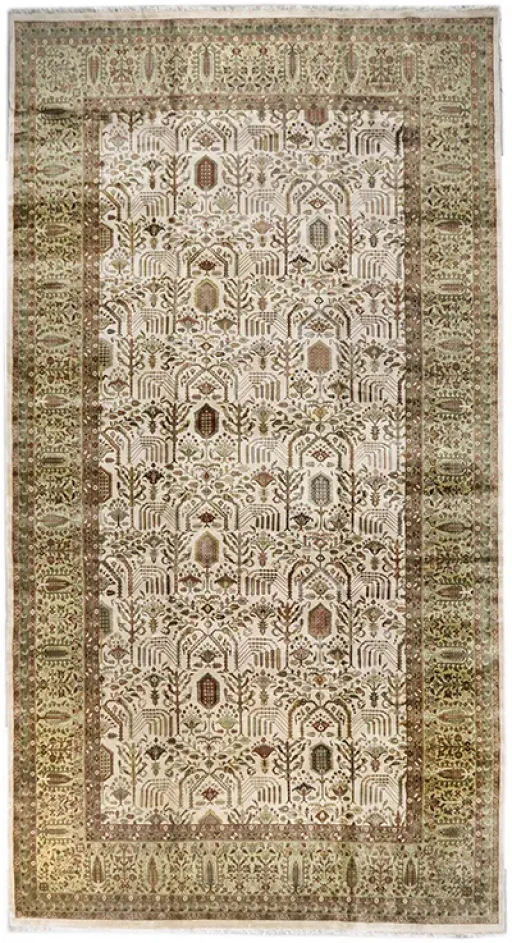
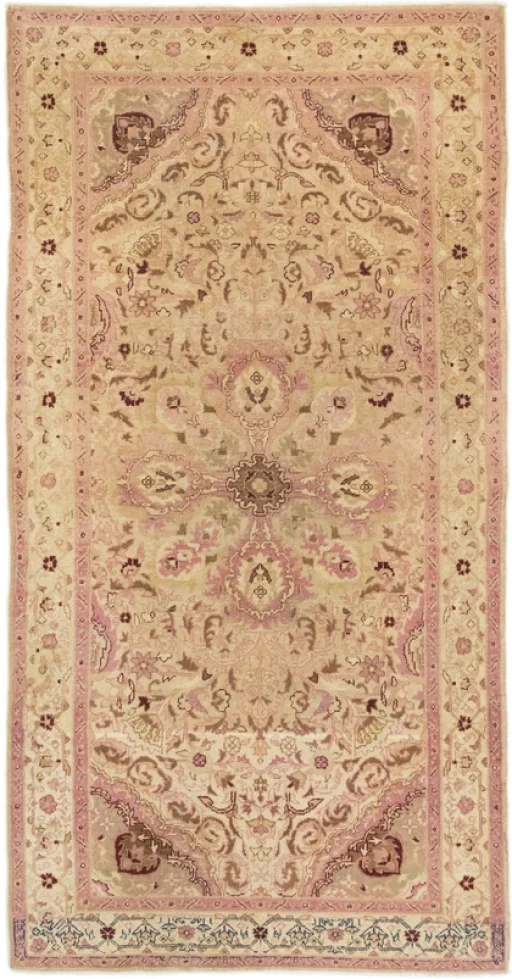
Amritsar rugs come from the Punjab, where rug weaving has a long tradition. Our two Amritsar pieces are antiques from the early 20th century, in cream and dark red. They show the calm, well-balanced drawing typical of this centre and suit classic interiors and collectors alike.
04
Two features define this collection: age and size. Several rugs are around 100 years old, and most measure well over three metres; the largest is 673 × 360 cm.
An antique rug can show signs of use, such as a lower pile in places or gentle colour changes. We describe the condition of every piece openly on its product page. For more antiques from other regions, browse our antique rug collection.
For large rooms, plan the size before you choose the design. Our guide to rug size and placement shows how much space to leave around furniture.
05
Indian or Persian Rug?
Indian and Persian rugs often share the same motifs, because many Indian designs go back to Persian models. The difference lies in the details: Indian rugs often have a larger, more open drawing, while Persian rugs from Tabriz, Isfahan or Nain are usually more densely patterned.
Neither is better per se. Look at the individual piece: its condition, knot density and how it fits your room. To compare, take a look at our classic Persian rugs.
06
Personal Advice and Our Showroom
With rugs of this size and value, it helps to talk to someone. Talk to us personally or book a showroom visit in Hamburg, where you can see and touch the rugs. If you cannot come in person, explore our 3D showroom online.
Rugbloom has been a family business since 1870, now in its fourth generation. We offer free shipping within the EU, free returns and the option to pay in instalments.
07
Frequently Asked Questions About Indian Rugs
Short answers to the questions we hear most often.
Are Indian rugs good quality?
Yes, when they are hand-knotted from good wool. Quality depends on the individual piece rather than the country: knot density, wool, condition and workmanship matter most. You will find these details on every product page.
What is the difference between an Indian and a Persian rug?
Many Indian rugs follow Persian designs, but the drawing is often larger and more open. Persian rugs are usually more densely patterned. Both can be excellent; the individual piece decides.
What is an Agra rug?
An Agra rug comes from the city of Agra in northern India, one of the country's oldest weaving centres. These rugs are known for large formats and classic Indo-Persian designs.
How old are the antique Indian rugs in your collection?
Our antique Agra and Amritsar rugs date from the early 20th century; the Jaipur pieces are mostly from the 1990s. The age of each rug is stated on its product page.
Can I see an Indian rug before buying it?
Yes. You can visit our showroom in Hamburg by appointment or explore the collection in our 3D showroom online. Our team is also happy to advise you personally.