01
Chinese Rugs: From Ningxia to Peking
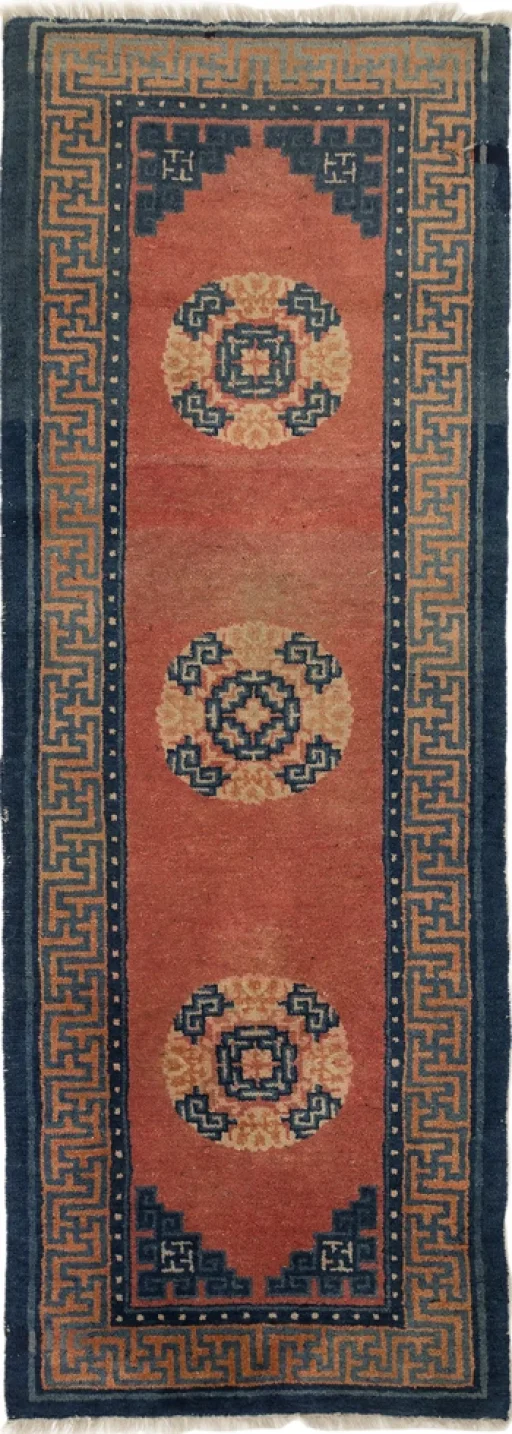
Ningxia in north-western China is considered one of the oldest centres of Chinese rug weaving. Later, workshops in Beijing and Tianjin became important centres, and many of their rugs were made for buyers abroad.
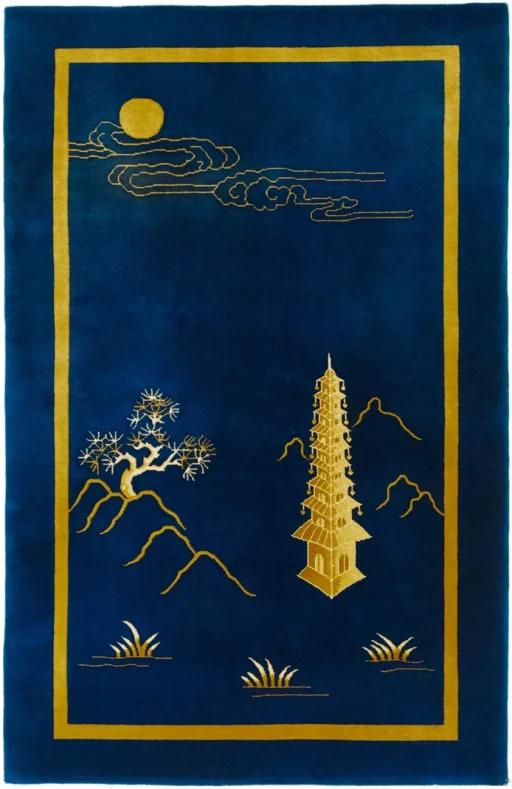
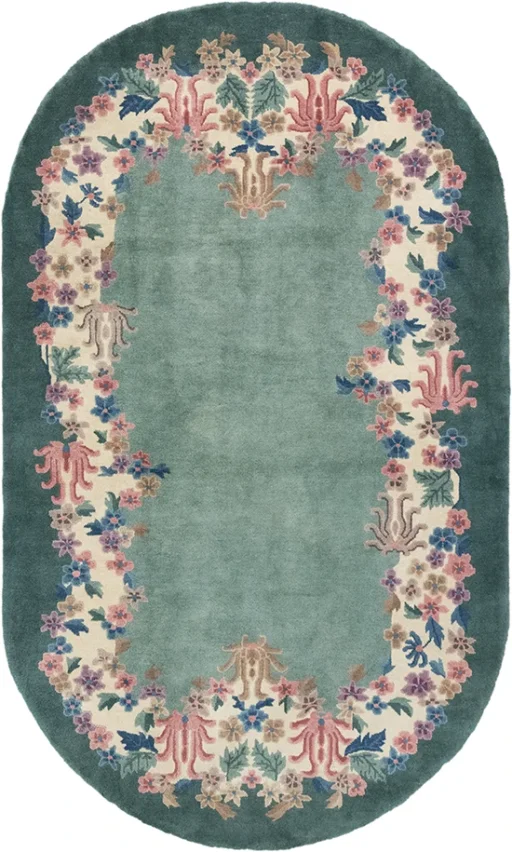
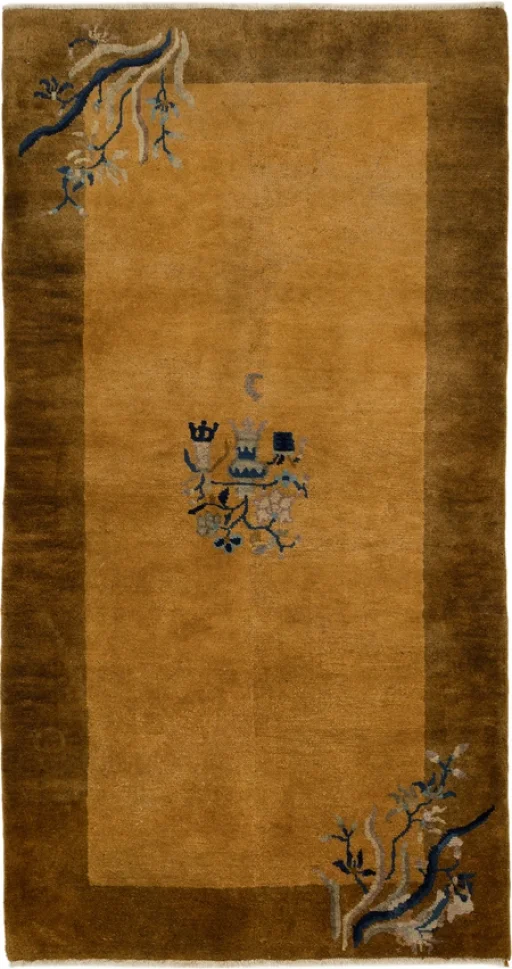
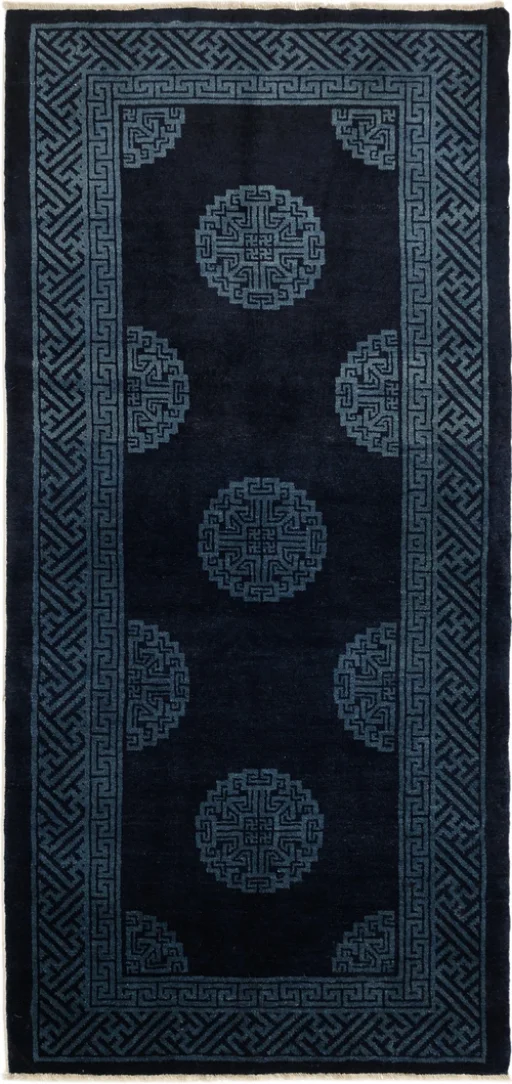
In the early 20th century, two styles became popular that still define how many people picture a Chinese rug: the Peking style, with a calm field and a few symbolic motifs, and the Art Deco style, with bolder colours and more open layouts.
Most rugs in our collection come from this period and the decades that followed. The age of each piece is listed on its product page.
02
Motifs, Colours and Pile
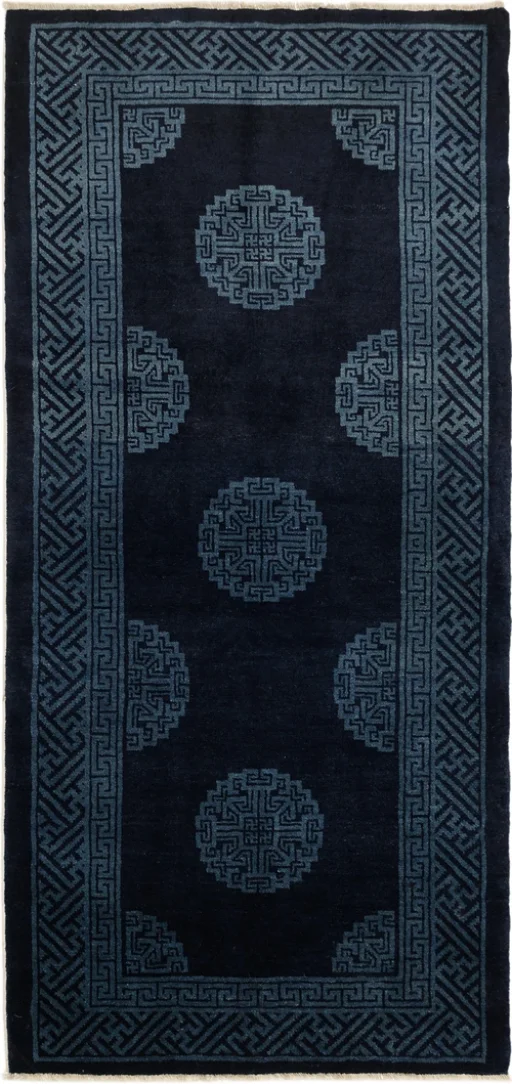
Chinese rugs speak a different visual language from Persian ones. Instead of a densely filled field, you often see a single medallion, scattered flowers or symbols such as clouds and dragons, framed by a narrow border.
The colours in our collection range from blue and dark blue to green, brown and cream. Many 20th-century Chinese rugs have a thicker pile than most Persian rugs.
If you want to know what the individual symbols mean, read our article on regions, patterns and symbolism.
03
Antique and Semi-Antique Chinese Rugs
Most pieces in our collection are 50 to more than 100 years old, from the 1900s to the 1970s. Many are compact sizes between about 155 × 75 cm and 235 × 153 cm, ideal for a bedroom, an entrance or a reading corner. The largest piece measures 520 × 335 cm.
Older rugs can show signs of use, such as a lower pile in places or gentle colour changes. We describe the condition of every piece openly on its product page. For more antiques from other regions, browse our antique rug collection.
04
The Styles in Our Collection
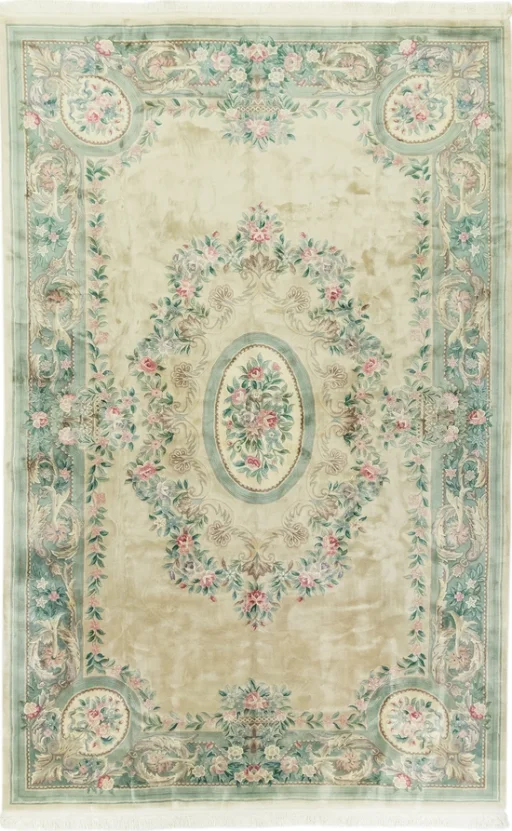
Most of our Chinese rugs follow traditional designs. The collection also includes a small silk piece in cream with a fine sheen, best suited to a quiet spot or as a wall hanging. More silk pieces are in our silk rug collection.
China Isfahan
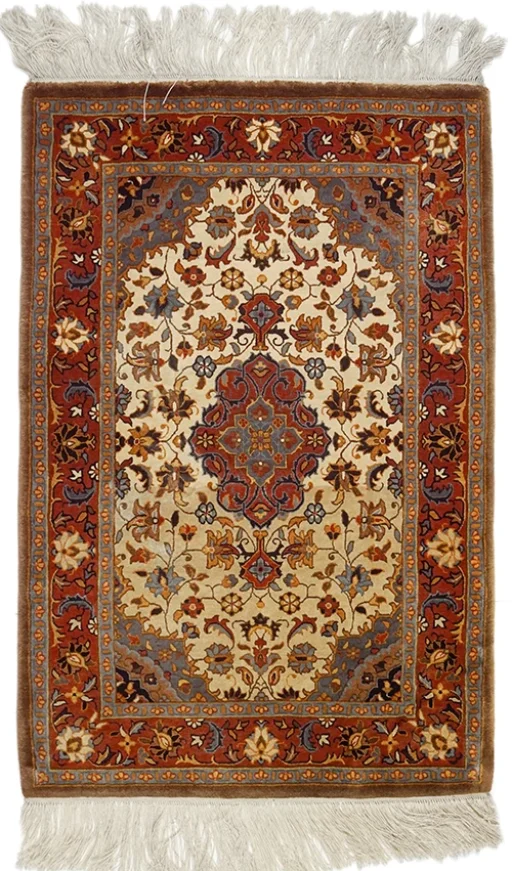
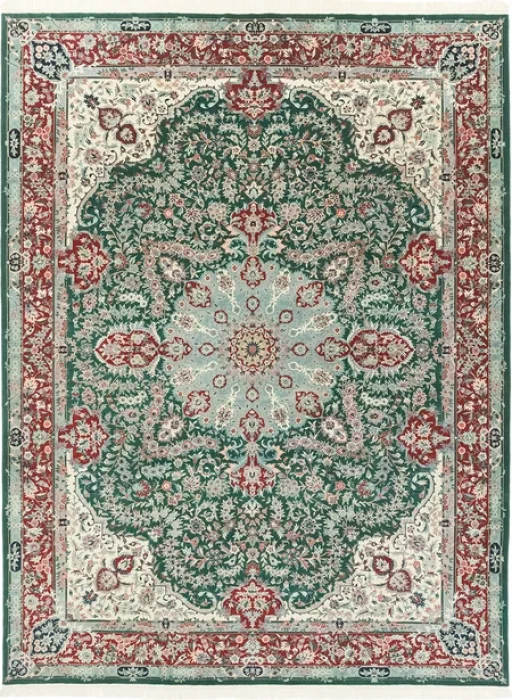
Our China Isfahan rug is a newer piece knotted in China after a classic Persian Isfahan design: a central medallion with fine floral tendrils. It combines Persian ornament with Chinese craftsmanship and suits a classic living or dining room. If you prefer an original from Iran, compare our classic Persian rugs.
05
Placing and Caring for Your Chinese Rug
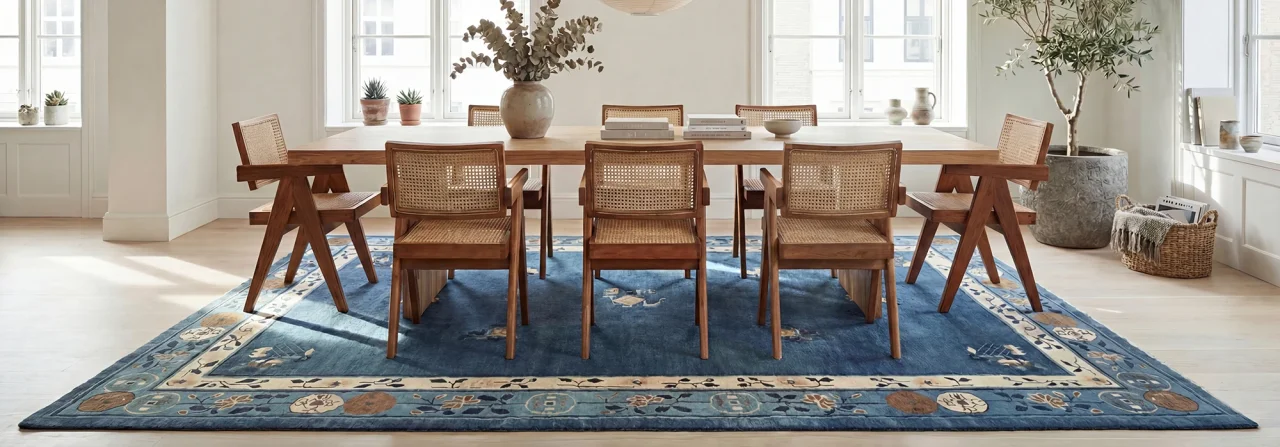
Small antique pieces work well where they are seen up close: beside the bed, in front of a sideboard or in an entrance. In a modern room, a single Chinese rug with a calm field adds history without visual clutter.
Antique wool needs gentle care: vacuum without a rotating brush, turn the rug occasionally and avoid strong direct sunlight. Our guide to caring for hand-knotted rugs explains the details.
06
Personal Advice and Our Showroom
07
Frequently Asked Questions About Chinese Rugs
Short answers to the questions we hear most often.
What is a Chinese rug?
A Chinese rug is a hand-knotted rug from China, usually made of wool. Typical features are a calm field, symbolic motifs such as clouds or dragons, and often a thicker pile than Persian rugs.
What is the difference between a Chinese and a Persian rug?
Persian rugs usually have densely filled fields and complex ornament. Chinese rugs leave more open space, use Chinese symbols and often have a thicker pile.
What is a Peking rug?
Peking rugs are named after Beijing, one of the main weaving centres in China. They typically show a calm field, a few symbolic motifs and a narrow border.
Are antique Chinese rugs suitable for everyday use?
Yes, if you choose the spot with care. Smaller antique pieces are ideal for bedrooms or reading corners with less foot traffic. If you are unsure, our team will advise you personally.
How old are the antique Chinese rugs in your collection?
Most date from between the 1900s and the 1970s. The exact age of each rug is listed on its product page.